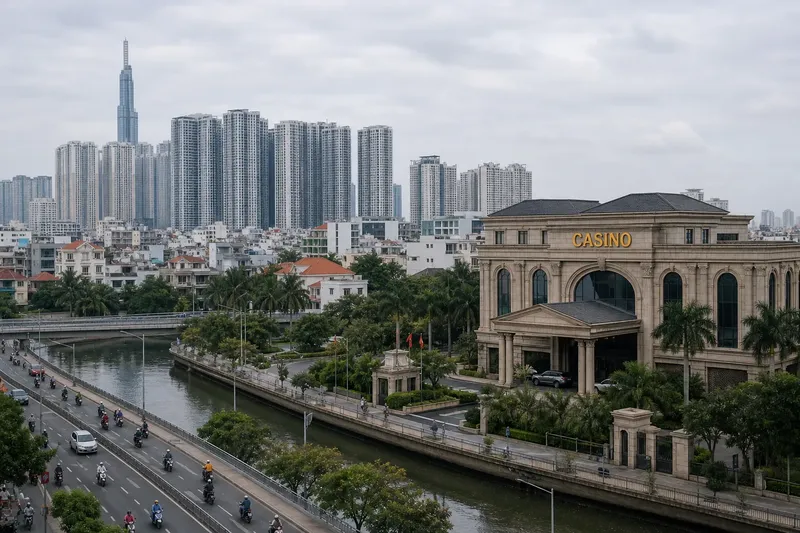
A Place-Name Is Not Proof of a Real Venue
A place-name can make a casino story sound local. Learn how to separate geographic clues from evidence about a real venue or condition in Thủ Đức.
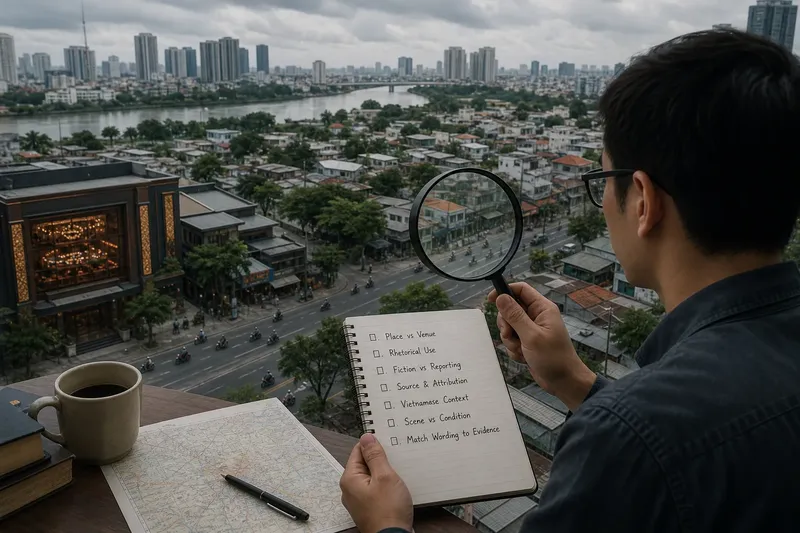
The common mistake in reading a casino story set in Thủ Đức is treating the place-name as proof that its events happened at a particular venue. That shortcut can turn a setting into an apparent local report, attaching claims to a neighborhood or business without evidence and leaving readers with a false impression of the place.
A location name is a clue about how a story is framed. It is not, by itself, verification. Use these checks to distinguish geographic language from claims about real venues and local conditions.
1. Separate a named place from a named venue
Thủ Đức identifies a place, not necessarily a specific building, business, or gambling operation. A story might mention the city as its setting while leaving every venue unnamed. Readers should not fill that gap by matching the description to a casino they recognize or have heard about.
Look for the actual level of detail in the text. Does it name a venue, give a street or district, or merely say that a scene occurs in Thủ Đức? Those are different claims. A broad location can establish atmosphere or orientation without identifying where anything happened.
If the text does name a business, that still does not establish that the business was involved in the reported events. The name is an allegation or reference that needs support, not a substitute for it.
2. Notice when a place-name is doing rhetorical work
Place-names can lend a story a feeling of immediacy. “In Thủ Đức” sounds more concrete than “somewhere in the city,” even when the surrounding account supplies no further identifying detail. The name may help readers imagine a scene, suggest local relevance, or make a general claim feel rooted in a particular area.
That effect matters especially when casino language appears alongside descriptions of nightlife, tourism, or urban change. The location can quietly imply that gambling is a defining feature of the place, even if the story offers no evidence about how common such activity is or where it occurs.
Ask what the place-name contributes beyond mood. If removing it would leave the factual claim unchanged, it may be serving as a frame rather than as evidence.
3. Keep fictional settings distinct from local reporting
Fiction can borrow real geography and still invent its venues, characters, and events. A story set in Thủ Đức may use familiar street names or recognizable urban details to create a persuasive setting. That resemblance does not turn a fictional casino into a real one.
Imagine a short story places an unnamed gaming room near a busy road in Thủ Đức and describes a tense late-night encounter. The writer’s action is to use a recognizable location to anchor an invented scene; the expected observable result is that readers can picture where the scene belongs, not that they can identify an actual business or infer a local pattern.
Genre signals help, but they are not always decisive. A work may blend documentary style with invention, or a promotional caption may present a dramatized scene in a news-like voice. Check how the item identifies itself and whether it distinguishes constructed scenes from claims about actual events.
4. Trace the claim to its source
A place-name can be repeated as material moves between a headline, a social post, a translation, and a longer article. Each retelling may sound more definite than the original. Before treating the location as evidence, identify who makes the claim and what they actually say.
Separate a speaker’s statement from the publication’s own reporting. A quoted resident, an anonymous online account, a narrator, and a journalist do not carry the same evidentiary role. Attribution tells readers where a claim comes from; it does not automatically verify the claim.
When available, follow a link to the original item rather than relying on a cropped image or a secondhand summary. A headline may name a place more confidently than the article beneath it.
5. Read Vietnamese place references in context
Vietnamese-language references may use a city name, a ward name, a familiar local shorthand, or a broader regional label. A translation can flatten those distinctions. It may render several kinds of geographic reference as the same English phrase, making an account appear more precise—or more sweeping—than it was.
Pay attention to the exact wording in the original where it is available. Does the Vietnamese text identify a specific administrative area, refer loosely to the city, or use a colloquial expression? A translation should preserve uncertainty rather than silently supply a venue or neighborhood that the source never identifies.
Readers who do not know Vietnamese can compare the translated wording with the original text or ask a fluent reader to clarify the geographic reference. The aim is not to extract a more dramatic location, but to keep the claim at the level the source supports.
6. Distinguish a local condition from a single scene
A story about one encounter does not establish a condition across Thủ Đức. Nor does a photograph of a casino-like interior show how common such venues are, who uses them, or whether the image was made locally. Those broader conclusions require information beyond a place-name and a vivid scene.
Watch for language that moves from an individual account to claims about “the area,” “residents,” or “local nightlife.” That shift may be reasonable if the article explains its basis, but it should not pass unnoticed. A singular event and a general pattern are different kinds of statements.
When a story makes a broad claim, ask what supports the move from the specific to the general. If the answer is only that the story takes place in Thủ Đức, the claim remains unsubstantiated.
7. Match the wording to what the evidence supports
Careful wording preserves useful detail without pretending to know more than the source establishes. “A fictional scene set in Thủ Đức” is different from “a casino in Thủ Đức,” which can sound like a claim about an existing venue. “The account names Thủ Đức” is different again: it reports the text’s wording without endorsing its accuracy.
When sharing or discussing a story, keep those distinctions visible. Avoid adding a business name, neighborhood, or local explanation that the original does not provide. If the location is uncertain, say so plainly instead of turning uncertainty into a confident identification.
This is especially useful when a story circulates detached from its original context. A short caption can preserve the setting while making clear whether the item is fiction, commentary, or reporting.
What can a place-name establish?
Does naming Thủ Đức prove that an event happened there?
No. It establishes that the text names Thủ Đức, but not that the described event occurred there. Evidence for an event and its location must come from more than the place-name itself.
Does an unnamed casino in a story refer to a real business?
Not on that detail alone. The venue may be invented, composite, or left vague, so readers should not attach the description to a real business without separate support.
Can a photograph confirm a location?
A photograph may offer clues, but its caption and appearance do not independently establish where or when it was made. Look for reliable context connecting the image to the specific place and claim.
How should readers describe an uncertain setting?
Use language that attributes the detail to the text, such as “the story is set in Thủ Đức” or “the post names Thủ Đức.” That wording communicates what is known without implying that a real venue or local condition has been verified.
Keep the place-name in its proper role
Thủ Đức can be meaningful to a story without serving as proof of a casino, an event, or a local trend. The practical habit is simple: identify exactly what the source names, separate that wording from what it establishes, and resist supplying the missing details yourself. A place-name can orient the reader; evidence must do the identifying.