The Word Casino: What a Label Leads Readers to Expect
Learn how the word casino shapes expectations in Thủ Đức, and separate a familiar label from evidence about what a venue actually contains or offers.
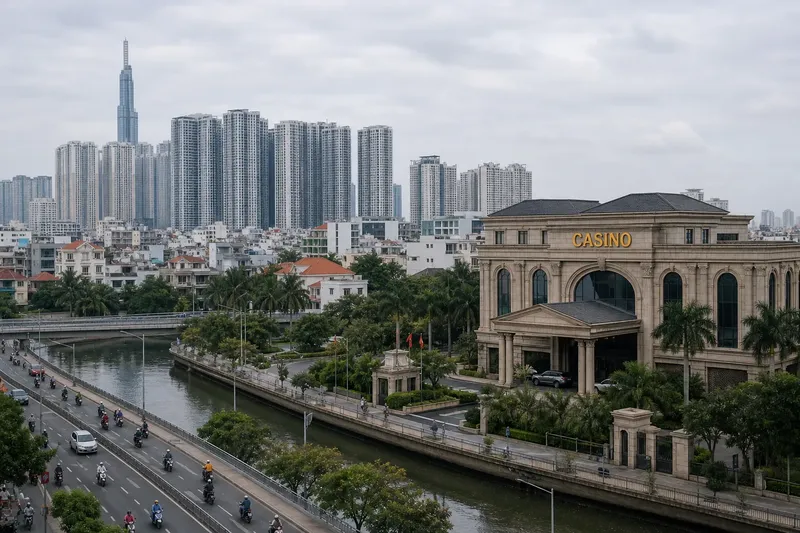
The most common mistake in reading the word “casino” is treating the label as a description of everything inside a place. In Thủ Đức, as elsewhere, that shortcut can make a reader picture a particular kind of venue before the text has supplied any supporting detail. The result is a confident impression built from a word, not from evidence.
To read the label carefully, ask what kind of text you are looking at and what it actually says about the place. A Vietnamese-language sign, a news report, a travel description, and a character’s remark may use or translate the same term for different purposes. The word can guide attention; it cannot, by itself, establish what a venue contains, permits, or offers.
Start by separating the label from the claim
“Casino” is a familiar English label associated with gambling and entertainment. Readers may also connect it with bright interiors, gaming tables, money, or a particular style of hospitality. Those associations are useful clues to a reader’s expectations, but they are not observations about a specific Thủ Đức venue.
A claim is narrower and can be checked against its source. “The article calls the venue a casino” reports the article’s wording. “The venue offers gambling” makes a claim about what happens there. The second statement needs evidence beyond the label, such as a clear description, a relevant document, or an accountable source.
This distinction matters in translation, too. An English writer may choose “casino” to render a Vietnamese term, explain an unfamiliar setting, or evoke a recognizable image. Without the original wording and context, a reader cannot tell which purpose the translation serves.
Keep the word in quotation marks when you are discussing the source’s terminology rather than asserting a fact about the place.
Choose an approach that fits the text you have
The right reading method depends on your situation. A label on its own calls for restraint; a text with descriptive details calls for close attention to those details; a translation calls for comparison with the original where possible. Sorting the situation first helps prevent assumptions from sliding into claims.
- If you have only a name or sign: Treat “casino” as a label, not a complete description. You can report that the sign uses the word, but you cannot infer the venue’s activities from that word alone.
- If you are reading a news report: Separate the reporter’s own account from quoted speech, captions, and background framing. Look for the specific source behind each factual claim rather than letting the label stand in for one.
- If you are reading promotional or travel copy: Read the term as part of the writer’s presentation. Notice whether the surrounding language explains the venue or relies mainly on atmosphere and familiar associations.
- If you are reading a Vietnamese text through an English translation: Check whether the original term is available and whether the translator explains a choice that carries a strong cultural or legal implication. If it is not, preserve that uncertainty.
- If you are writing about the place yourself: Name the source of the label and describe only what that source supports. Use a more precise description when you have reliable details; otherwise, say that the venue is described as a casino.
Say you are reading a short English caption about a building in Thủ Đức that calls it “a casino,” but gives no account of its interior or activities. You can note that the caption applies the label and that it invites a reader to expect a gambling venue. You should not turn that expectation into a statement that gambling takes place there.
Ask what the word makes visible and what it leaves out
A label does more than name. It selects a frame: readers may imagine leisure, risk, money, nightlife, or a particular kind of visitor. Other aspects of a place—its actual use, its surroundings, the people who work or gather there, and the limits of the source’s knowledge—can recede from view.
That framing is especially consequential when writing about a neighborhood. If a text uses “casino” to make Thủ Đức sound glamorous, illicit, or unfamiliar, ask which details create that impression. Is the description grounded in observed features, or does the word carry most of the descriptive weight? The answer helps distinguish the source’s portrait from the place it purports to represent.
Do not assume that every reader hears the same associations. A Vietnamese reader, an English-speaking visitor, and a translator may connect the term with different institutions or settings. A careful account identifies whose wording is being discussed rather than presenting one audience’s interpretation as universal.
Check the source before making a stronger claim
When a label matters to your interpretation, trace where it comes from. Is it printed on a sign, used by a venue, chosen by a journalist, supplied by a translator, or spoken by a character? Those are different kinds of evidence. A quotation can establish that someone used the word; it does not automatically establish that the word accurately describes the place.
Then look for the detail the label is standing in for. A specific description of an activity is more informative than a category name. A document may clarify how an organization identifies itself, while an official rule may clarify what is allowed in a particular context. These sources answer different questions, so do not treat one as a substitute for another.
For real venues and legal or regulatory questions, rely on current, authoritative local information rather than an English label or a translated phrase. The applicable meaning may depend on the source and local rules.
When the source does not resolve the question, state the limit plainly: the text calls the venue a casino, but does not explain what it contains or offers.
What does “casino” mean in a translated text?
Can the English word establish what a venue offers?
No. It establishes that the writer or translator chose that term, not that a particular activity is available at the venue. Look for a direct description or a source that supports the more specific claim.
Should I translate a Vietnamese term as “casino”?
Choose a translation that fits the original wording and the context, not merely the image that sounds most familiar in English. If the choice could lead readers to a strong assumption, explain the original term or leave the uncertainty visible.
How should I describe a sign that uses the word?
Report what is visible: the sign uses the word “casino.” Avoid adding details about the venue’s operations unless another source establishes them.
What if different sources use different labels?
Attribute each label to its source and compare the descriptions that accompany it. A difference in wording may reflect translation, promotion, reporting, or disagreement; the labels alone do not settle which account is accurate.
Write with precision when the evidence is thin
Precision does not require a long disclaimer. It requires choosing a sentence that says exactly what is known. “A local sign calls the venue a casino” is narrower than “The casino offers gambling.” “The English report describes the building as a casino” keeps the characterization attached to the report.
When you have stronger, relevant information, state it directly and identify its basis. When you do not, resist filling the gap with cinematic details or assumptions about Thủ Đức. The word casino can tell a reader how a source wants a place to be understood; the surrounding evidence must do the work of showing what the place actually contains or offers.