A Scene, Not a Map: Reading a Casino Setting in Fiction
A close-reading routine for a casino setting in fiction helps separate atmosphere, character, and plot from details that might be mistaken for visitor information.
The common mistake in reading a casino scene is to treat its details as directions to a real place. A sentence about a doorway, a table, or the light over a gaming floor may sound concrete, but taking it as visitor information can blur the difference between an invented setting and an actual venue. A close reading of a casino setting in fiction asks a different question: what does this place make possible in the story?
A week-long routine can help you answer that question without turning the scene into a travel guide. Set aside a short reading session each day, and keep two columns in a notebook: what the passage shows and what the story uses it to do. The first records observable details in the text; the second tracks their effect on character, mood, or plot.
Day one separates setting details from visitor claims
Read the passage once without pausing. Then reread it and underline details the narrator actually supplies: a lit sign, a crowded threshold, a cashier’s counter, a character who hesitates before entering. Write down what is present on the page, not what you assume would be present in a real casino.
Now mark any sentence that seems to promise practical knowledge: how to enter, where to go, what a venue offers, or what a visitor should expect. Ask whether the text names an identifiable place, gives a source, or simply uses familiar casino language to make the scene legible. If it offers no basis for real-world guidance, keep the detail in the column for fiction.
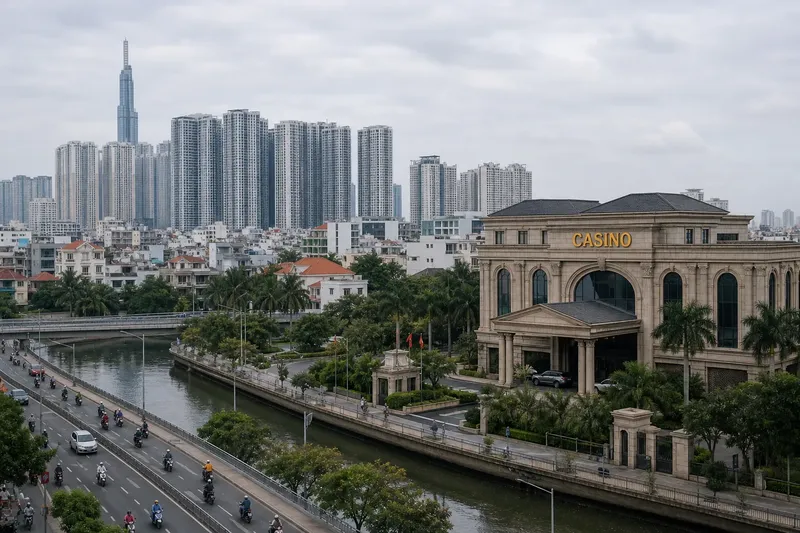
For a Thủ Đức setting, the distinction matters especially when Vietnamese place names or local references appear. A named district can anchor a scene without confirming that the described casino exists there or that its details reflect local conditions.
Day two tracks what the setting does to a character
On the next reading, follow one character through the space. Notice where they pause, what they look toward, and which parts of the room they ignore. A setting becomes narratively useful when it changes what a character can see, conceal, approach, or avoid.
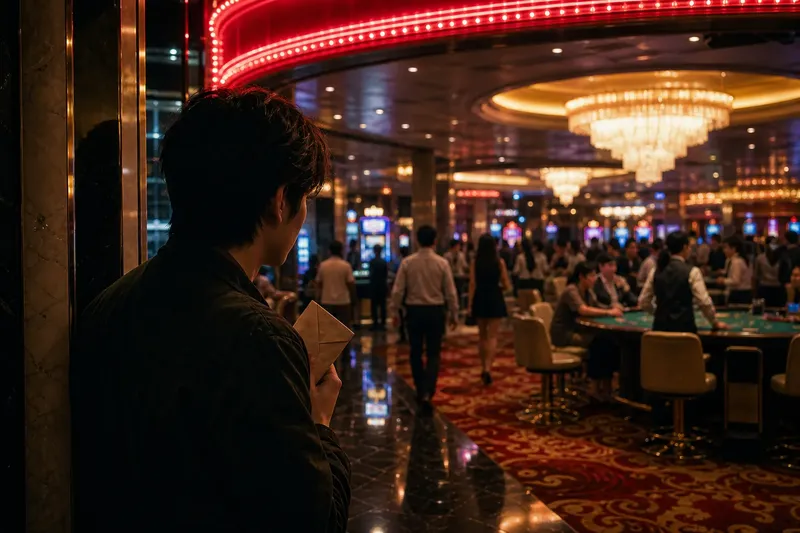
Imagine a fictional scene in which a character enters a brightly lit gaming room carrying a folded letter. The starting point is their wish to deliver it unnoticed; the action is that they stop beneath a large sign and watch the crowd instead of crossing the floor. The expected observable result in the story is a delay that reveals hesitation, not useful information about an actual venue’s layout.
Record the character’s movement as a sequence of choices. This keeps your reading centered on the scene’s pressure rather than on imagined visitor routes.
Day three listens for mood and point of view
Casino settings often gather sensory details: bells, felt, mirrored surfaces, announcements, music, or shifting light. Do not assume each detail carries the same meaning. Ask who notices it. A sound described by a nervous newcomer may feel intrusive; the same sound filtered through a practiced employee may pass almost unnoticed.
Look, too, at the words the narrator selects. Does the prose call the room dazzling, tiring, orderly, or confusing? Those terms frame the place through a viewpoint. They are not neutral descriptions, and they do not automatically represent how visitors or residents experience a real location.
Write one sentence about the scene’s mood and point to the specific words that support it. If you cannot identify those words, your impression may be coming from a familiar image of casinos rather than from this passage.
Day four checks how the scene moves the plot
Reread the scene with a simple question: what changes because it happens here? A meeting might be interrupted by noise; a character might be recognized in a crowd; a decision might become harder because another person is watching. These are plot functions. The room’s decorative details matter when they support one of them.
Try removing one vivid detail in your notes. If the action would unfold in the same way, that detail may mainly establish atmosphere. If removing it would change a character’s choice or the timing of an encounter, it may be doing structural work in the story.
Keep this as a reading exercise, not an instruction for staging a real visit. Fictional access, customs, and arrangements can be invented or compressed for dramatic purposes.
Day five compares the scene with the story’s framing
Look at what comes immediately before and after the casino passage. Does the narrative introduce it as a refuge, a workplace, a spectacle, a point of conflict, or somewhere a character has little choice about entering? The surrounding scenes can reveal whether the casino is the subject or simply the setting for another concern.
Also notice whose perspective is absent. A scene focused on one visitor may leave employees, nearby residents, or other patrons outside the frame. That omission is not proof of a factual error; it is part of the story’s selection. It can, however, explain why the passage feels narrower than a description of a real place would need to be.
Day six asks what a casino scene can and cannot tell you?
Does a named place make the scene factual?
No. A real place name can provide a fictional scene with a recognizable anchor, but it does not verify the events or details around it. Treat the name as part of the text unless the passage separately establishes a factual basis.
How can I tell atmosphere from plot information?
Ask whether a detail changes a character’s decision, access, or timing. If it mainly shapes the reader’s sense of the room, it is probably doing atmospheric work, though a detail can serve both purposes.
Should I use the scene to plan a visit?
No. A fictional description is not a reliable source for access, services, rules, or current conditions. Look to appropriate real-world sources for visitor information instead.
What if the narrator sounds certain?
Certainty is a feature of the narration, not independent confirmation. Note whether the story provides a source or context, then distinguish that claim from what the passage itself dramatizes.
Day seven writes a compact close reading
Use the final session to turn your notes into a short paragraph. Name the scene’s main function, identify the details that carry it, and explain how the viewpoint shapes their effect. Keep any uncertain real-world implication separate from your interpretation.
For example, you might conclude that a casino room creates a public stage for a private decision, while its lights and noise make the character’s hesitation visible to the reader. That describes what the scene accomplishes; it does not describe a venue for prospective visitors.
This routine makes a casino setting in fiction easier to read on its own terms. The most useful final question is not whether the scene could serve as a map, but what the story would lose if the character were somewhere else.