From Postcard Glamour to Screen Icon: Casino Imagery in Popular Culture
Casino imagery in popular culture turns rooms of chance into shorthand for glamour; learn how to read the visual cues and what they leave unseen.
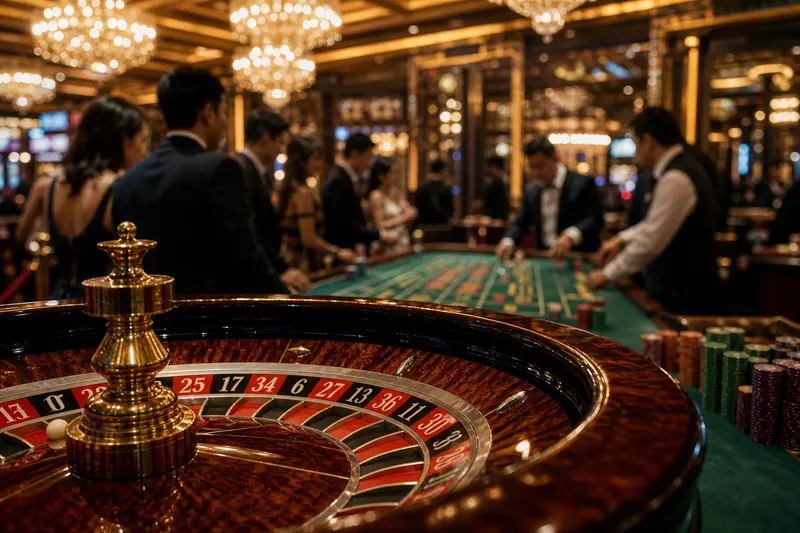
The common mistake in reading casino imagery is to treat its glitter as a faithful portrait of casino life. Casino imagery in popular culture is usually a designed shorthand: a flash of crystal light, a green table, a sharply dressed figure. It can make a place feel glamorous before a story has told us anything about who is there, what the room means, or what lies beyond its frame.
Why does casino imagery look glamorous?
Casino glamour is built from contrasts. Dark interiors set off bright chandeliers; polished surfaces catch moving light; formal clothes suggest ceremony in a place associated with chance. The eye receives a concentrated impression of abundance and control, even when the scene is about uncertainty.
Postcards helped make this impression portable. A view of an ornate room or a brilliant marquee could stand for an entire destination. The image did not need to explain the labor of running the venue or the ordinary streets around it. It offered a small, composed promise of spectacle that could be carried away and recognized elsewhere.
Later film, television, advertising, and music videos adapted that visual vocabulary. A roulette wheel, a velvet rope, or a mirrored ceiling can now signal a certain kind of occasion without requiring a long explanation. The symbol travels easily because viewers have encountered similar cues in many settings.
Notice which detail the image makes brightest; it often tells you what kind of glamour the scene wants to sell.
How did the postcard become a screen icon?
The postcard and the screen solve different problems. A postcard compresses a destination into a still composition, often favoring a recognizable building, sign, or lavish interior. A moving image can add sound, gesture, and time: chips slide across felt, a door opens, a face hesitates under hard light. Yet both forms select a few memorable details and let them stand for a larger place.
Screen conventions also turn objects into cues. A close-up of a spinning wheel can create suspense; a wide shot of a crowded floor can suggest excess; a doorway framed by gold trim can announce entry into a world apart. The same object may carry different meanings depending on editing, music, color, and the character’s reaction.
That shift from postcard view to screen icon does not mean the image becomes more complete. Motion may make a setting feel immediate, but camera position still determines what can be seen. A scene can show a table in exquisite detail while excluding the surrounding neighborhood, the staff, or the reasons a character entered the room.
What visual cues make a casino scene recognizable?
A scene often relies on a cluster of cues rather than one definitive object. Common choices include:
- Light: chandeliers, neon, or reflected highlights make surfaces feel theatrical.
- Color: deep red, black, gold, and green can suggest ceremony, luxury, or the gaming table, depending on context.
- Texture: velvet, polished wood, glass, and metal make the setting seem tactile and expensive.
- Framing: a doorway, rope, or table edge can separate insiders from outsiders.
- Gesture: a dealt card, a placed chip, or a composed glance can imply risk without explaining its stakes.
- Sound and rhythm: the clatter of chips or a measured musical pulse can make the room feel charged.
These cues are not neutral decorations. A low camera angle can make a room feel imposing; a close crop can turn a hand into the center of the story. The same gold-lit interior might suggest aspiration in one scene and entrapment in another, depending on who controls the space and how the audience is asked to feel.
What does casino glamour leave outside the frame?
It often leaves out ordinary context. The image may omit the neighborhood beyond the entrance, the people who maintain the room, and the varied reasons visitors arrive. It may also replace local detail with a generic luxury vocabulary, making one venue appear interchangeable with another.
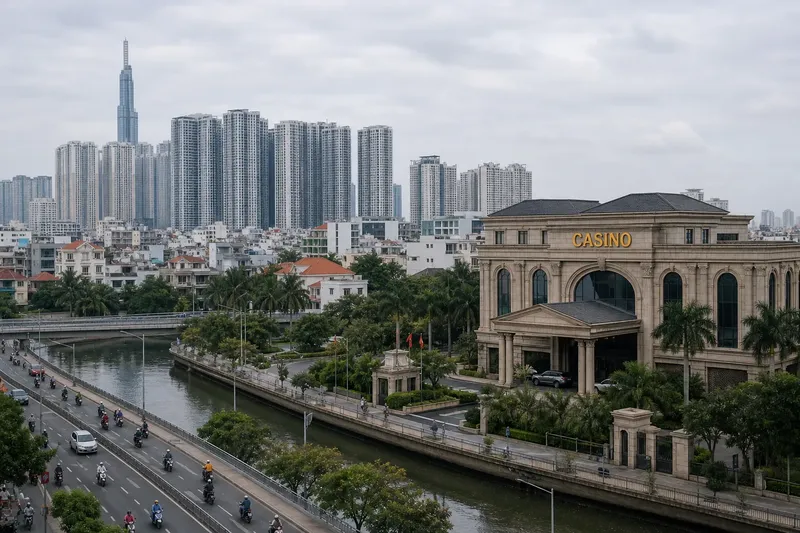
That omission matters especially when a casino is attached to a real place. In Thủ Đức, for instance, a fictional scene could use familiar casino motifs while showing little that distinguishes its setting from an imagined international resort. The result might communicate “glamour” clearly while telling the viewer almost nothing about local language, urban surroundings, or how residents understand the place.
Imagine a filmmaker setting a scene in a neighborhood venue and opening on gold light, green felt, and a close-up of a chip. If the next shot widens to include the entrance, nearby street activity, and a character speaking in a locally grounded way, viewers gain more than an atmosphere: they can begin to locate the scene. The observable difference is not that the glamour disappears, but that it no longer has to carry the whole meaning by itself.
Ask what the image makes legible, and what it treats as expendable background.
How can you tell a local image from a generic casino fantasy?
Look for details that have a reason to belong to this place rather than to casino imagery in general. A sign, language choice, street-facing view, or pattern of movement may provide context, but its presence alone does not make a representation locally specific. The details should fit together rather than function as decorative tokens.
Compare the frame with the story around it. Does the location shape what characters say or do, or could the same scene be moved anywhere without changing its meaning? Does the image recognize the people and spaces beyond the gaming floor, or does it use a place-name only to lend atmosphere?
For a reader, the useful distinction is between setting and shorthand. A scene can deliberately use shorthand, but its limits become clearer when you ask whose point of view organizes the picture and what context the story provides elsewhere.
What do viewers often ask about casino imagery?
Why do films use roulette wheels so often?
A wheel gives a scene a visible focal point and a natural pause while its movement builds anticipation. It can symbolize chance quickly, though the story still has to show what is at stake for the people watching it.
Does casino imagery always mean wealth?
No. The same visual signs can imply exclusion, temptation, danger, performance, or loneliness. Lighting, sound, character perspective, and the events around the image change how those signs read.
Are casino scenes usually accurate?
Accuracy depends on what the scene claims to represent. A stylized sequence may be effective as fantasy while offering little information about a particular venue or community.
How can a viewer notice what the camera excludes?
Pay attention to the edges of the frame, the people who remain unnamed, and the locations the scene never shows. Then consider whether those omissions are part of the story’s point or simply make the setting easier to consume as spectacle.
What makes casino imagery more than decoration?
Imagery becomes meaningful when its style connects to a point of view. A chandelier can be a sign of aspiration, a barrier between classes, or an absurd ornament; the scene’s choices determine which reading has weight. A familiar icon is a starting cue, not a complete argument about the place it depicts.
When you encounter casino imagery in a film, poster, or postcard, begin with the brightest object, then look outward: who is allowed into the frame, what local details remain visible, and what the image asks you to feel before you know why. That small pause can separate a memorable visual shorthand from a fuller account of the people and place it leaves just beyond the crop.